 English
 中文简体
中文简体
 русский

Content
- 1 What Is Wood Grain PVC Decorative Film and How Is It Made?
- 2 Key Applications of Wood Grain PVC Decorative Film
- 3 Surface Performance Properties and Industry Standards
- 4 Advantages of Wood Grain PVC Film Over Alternative Surface Materials
- 5 How to Select the Right Wood Grain PVC Film for Your Application
- 6 Installation and Handling Best Practices for PVC Decorative Film
What Is Wood Grain PVC Decorative Film and How Is It Made?
Wood grain PVC decorative film is a engineered surface material that replicates the visual appearance and, in many cases, the tactile texture of natural wood through a multi-layer polymer construction. The base material is polyvinyl chloride — one of the most versatile and widely produced thermoplastic polymers in the world — which is compounded with plasticizers, stabilizers, and pigments to produce a flexible, printable substrate. A high-resolution wood grain pattern is applied to this substrate through rotogravure printing, a process that uses engraved copper cylinders to transfer ink with exceptional detail and color consistency across continuous rolls of film. The printed layer is then protected by one or more transparent topcoat layers — typically PVC lacquer, polyurethane, or acrylic — that provide scratch resistance, UV stability, and the surface gloss or matte finish specified for the end application.
The most advanced wood grain PVC films go beyond flat printing to incorporate embossed surface textures that physically replicate the pore structure, grain lines, and knot formations of specific wood species. This embossing is achieved by pressing the film against a heated roller engraved with the inverse of the desired texture — a process called synchronized embossing when the texture is precisely aligned with the printed grain pattern to create a convincing three-dimensional visual and tactile effect. The result is a film surface that not only looks like oak, walnut, maple, or teak but feels genuinely textured to the touch, considerably enhancing the realism of the finished product compared to earlier generations of flat-printed decorative film.
Film thickness varies from approximately 0.08 mm for thin lamination films used in furniture foil wrapping to 0.5 mm or more for self-adhesive films intended for surface renovation and DIY applications. The total thickness, along with the formulation of the PVC base and the type of topcoat applied, determines the film's mechanical performance, its flexibility for wrapping curved profiles, and its suitability for different substrate bonding methods.
Key Applications of Wood Grain PVC Decorative Film
Wood grain PVC decorative film is applied across a remarkably diverse range of industries and product categories, driven by the same fundamental demand: the visual warmth and familiarity of natural wood at a fraction of the material cost, with significantly greater dimensional stability and consistency than solid wood or wood veneer. The following application areas represent the largest end-use markets globally.
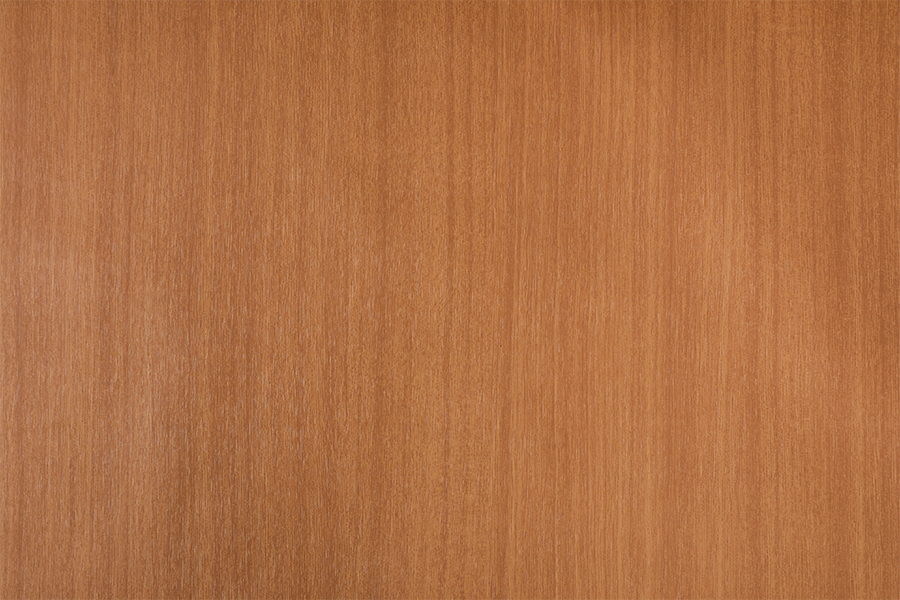
Furniture Surfaces and Cabinet Doors
Furniture manufacturing consumes the largest share of wood grain PVC decorative film produced worldwide. MDF, particleboard, and plywood panel furniture — which form the overwhelming majority of flat-pack and ready-to-assemble furniture sold globally — require a surface treatment that provides the appearance of solid wood while protecting the engineered wood substrate from moisture, abrasion, and normal use damage. Wood grain PVC film is laminated to these panels using either hot press bonding with PUR (polyurethane reactive) adhesive or cold press bonding with contact adhesive, producing a surface that is seamlessly bonded to the substrate and resistant to peeling or delamination under normal use conditions. For three-dimensional furniture components — including cabinet door frames, molded profiles, and curved drawer fronts — a softer, more flexible grade of PVC film is used in conjunction with membrane pressing or vacuum forming equipment that wraps the film around the profile's contours without wrinkling or tearing.
Flooring and Wall Panels
Wood grain PVC film is a core component in the construction of luxury vinyl tile (LVT) and vinyl plank flooring, where it serves as the decorative layer laminated between a rigid or semi-rigid core and a transparent wear layer. In this application, the film must be dimensionally stable under the thermal cycling and compressive loads that flooring experiences, and the wood grain pattern must be printed and embossed at sufficient resolution and depth to withstand close-range inspection when the product is installed at floor level. Wall cladding panels for interior decoration — including the popular wood-effect wall panels used in retail interiors, hotel lobbies, and residential feature walls — similarly use wood grain PVC film bonded to MDF, foam PVC, or aluminum composite panel substrates, leveraging the film's consistent pattern repeat and color uniformity to create seamless large-format wood-effect installations that would be prohibitively expensive in genuine timber.
Window Profiles and Doors
PVC window and door frame manufacturers use wood grain decorative film — typically a co-extruded or hot-stamped laminate bonded directly to the PVC profile during extrusion — to offer wood-look window and door frames that retain all the weather resistance and low maintenance advantages of uPVC while satisfying consumer preference for natural wood aesthetics. This application demands exceptional UV resistance from the film's topcoat layer, as window profiles are exposed to direct sunlight for extended periods year-round. Film formulations for this application typically incorporate high-concentration UV absorbers and HALS (hindered amine light stabilizers) to prevent color fading and surface chalking over the 25 to 30 year service life expected of window joinery.
Automotive Interiors and Electronics
Wood grain PVC film is used in automotive interior trim panels — dashboard inserts, door panel trims, and center console surrounds — where it provides the warmth of a wood aesthetic without the dimensional instability, weight, and cost of real wood veneer. The film must meet stringent automotive material standards including fogging resistance, odor emission limits, and temperature cycling performance from -40°C to +100°C without delamination or surface cracking. Consumer electronics manufacturers also use thin wood grain PVC film as a decorative laminate on speaker housings, television bezels, and audio equipment panels where the wood-effect finish contributes to a premium product positioning at modest additional material cost.
Surface Performance Properties and Industry Standards
The performance of a wood grain PVC decorative film in service is defined by a set of measurable physical and chemical properties that determine suitability for specific applications. Specifiers, purchasing managers, and product designers should evaluate these parameters systematically when selecting film for a given end use, rather than relying solely on visual appearance or price as selection criteria.
| Performance Property | Test Method | Typical Requirement | Application Relevance |
| Abrasion Resistance | Taber abraser (EN 438) | ≥150 cycles IP (furniture) | Worktops, counters, flooring |
| Scratch Resistance | Pencil hardness / cross-cut | ≥2H pencil hardness | Furniture, panels, doors |
| UV / Light Fastness | Xenon arc (ISO 4892-2) | ≥Grade 5 (blue wool scale) | Window profiles, outdoor-exposed panels |
| Chemical Resistance | Spot test (EN 12720) | No staining from common cleaners | Kitchen furniture, bathroom panels |
| Moisture Resistance | Wet adhesion test | No delamination after 24h immersion | Kitchen, bathroom, and wet area use |
| Formaldehyde Emission | EN 717-1 / CARB Phase 2 | ≤0.05 ppm (E0 equivalent) | Indoor residential and children's furniture |
Advantages of Wood Grain PVC Film Over Alternative Surface Materials
Wood grain PVC decorative film competes in the market against several alternative surface materials — including wood veneer, high-pressure laminate (HPL), melamine paper, and paper foil — each of which offers a different balance of cost, performance, and aesthetic quality. Understanding where PVC film has genuine advantages over these alternatives helps specifiers make appropriate material choices for specific projects and budget constraints.
- Versus Real Wood Veneer: Natural wood veneer delivers unmatched authenticity of grain, color variation, and surface depth, but it is dimensionally unstable under humidity cycling, requires finishing after application, cannot wrap complex profiles without specialist skills, and costs substantially more per square meter than PVC film. PVC film provides far better moisture resistance, requires no post-application finishing, wraps three-dimensional profiles reliably, and delivers consistent pattern repeat — making it the practical choice for production furniture and high-volume interior paneling applications.
- Versus Melamine Paper: Melamine-impregnated paper is the lowest-cost decorative surface material for flat panel furniture and is thermally fused to the substrate under high temperature and pressure. It is dimensionally stable and easy to clean but is brittle at edges, cannot wrap curved profiles, and chips easily at routed or machined edges — a significant disadvantage in furniture designs with shaped profiles. PVC film is more flexible, wraps profiles without chipping, and provides a softer, more tactile surface feel that is generally perceived as higher quality by end consumers.
- Versus High-Pressure Laminate (HPL): HPL offers superior abrasion, impact, and heat resistance — making it the correct choice for heavily used horizontal surfaces like kitchen worktops and laboratory benches. However, HPL is rigid, expensive relative to PVC film, and cannot be formed around profiles or curves without specialist post-forming grades and equipment. For vertical applications — cabinet doors, wall panels, furniture sides — PVC film delivers adequate surface performance at significantly lower material and processing cost.
- Versus Paper Foil: Impregnated paper foil is lighter, thinner, and lower cost than PVC film, but it is considerably less moisture-resistant and more susceptible to tearing and abrasion damage during both the manufacturing process and in service. For applications in dry interior environments with light use, paper foil performs adequately; for kitchen furniture, bathroom vanities, and commercial interiors, PVC film's superior moisture and chemical resistance make it the more appropriate specification.
How to Select the Right Wood Grain PVC Film for Your Application
The wood grain PVC decorative film market offers hundreds of pattern designs, thickness options, finish types, and technical grades. Navigating this range effectively requires working through a systematic selection process rather than choosing based on visual appearance alone. The following considerations should guide the specification process from initial pattern selection through to technical validation.
Choosing the Right Film Grade for the Substrate and Process
The film grade must be matched to both the substrate material and the bonding process used in production. For flat panel lamination using a hot press with PUR adhesive, a film with a thermally receptive back surface and defined temperature activation range is required. For membrane pressing of three-dimensional MDF doors, a softer, more elastic film grade with high elongation at break — typically 200 to 300 percent — is needed to accommodate the stretching around profile edges and recesses without tearing or whitening at stress points. For self-adhesive renovation film applied directly to existing furniture surfaces, a film with a pre-applied pressure-sensitive adhesive and a repositionable initial tack is the correct format. Applying a rigid panel-lamination film to a membrane pressing process, or vice versa, will produce consistently poor results regardless of the film's print quality or surface performance specification.
Evaluating Surface Finish and Gloss Level
Wood grain PVC films are available in a continuous range of surface gloss levels from ultra-matte (below 5 gloss units measured at 60°) through satin (10 to 30 GU) to high gloss (above 70 GU). The choice of gloss level has a significant impact on the realism of the wood grain effect — lower gloss levels generally produce a more natural, authentic wood appearance because real wood surfaces are inherently matte to satin in sheen, while high gloss finishes create a distinctly artificial appearance that reads as lacquered rather than natural. High gloss finishes do, however, provide better surface cleanability and stain resistance, which is why they remain popular in kitchen furniture despite their less natural appearance. For maximum realism in residential furniture and interior paneling, a synchronized embossed matte or satin finish film that combines physical texture with low reflectivity produces the most convincing wood-effect result currently achievable in PVC film technology.
Verifying Regulatory Compliance and Environmental Certifications
Wood grain PVC decorative films used in indoor residential and commercial furniture must comply with applicable chemical emission and material safety regulations. In the European market, the REACH regulation restricts the use of certain plasticizers — particularly phthalates classified as substances of very high concern — and responsible manufacturers have transitioned to DINP, DIDP, or non-phthalate alternatives such as DOTP or citrate esters for film plasticization. CARB Phase 2 compliance for formaldehyde emissions is a requirement for films used in products sold into the California market and is increasingly treated as a global benchmark. Environmental product declarations (EPDs), GREENGUARD Gold certification, and FSC Chain of Custody certification (for companies making broader claims about sustainable material sourcing) are increasingly requested by architectural specifiers and major furniture brand customers as part of their supply chain sustainability commitments.
Installation and Handling Best Practices for PVC Decorative Film
Even technically excellent wood grain PVC film produces poor results if handled or processed incorrectly. The following practical guidelines apply to the most common installation and lamination scenarios and reflect the most frequently encountered sources of quality problems in production environments and DIY applications.
- Condition Film and Substrate Together: Both the PVC film and the substrate panel must be acclimatized to the same ambient temperature and humidity before bonding. Film applied to a cold substrate in a warm room, or vice versa, will experience differential thermal expansion after bonding that stresses the adhesive interface and can cause bubbling or lifting at edges and corners.
- Ensure Substrate Surface Cleanliness: Any dust, release agent residue, wax, or moisture contamination on the substrate surface will prevent full adhesive contact and create visible bubbles or delamination zones. Sand the substrate to remove surface contamination, wipe with a clean dry cloth, and allow any solvent-based cleaning agents to fully evaporate before applying film.
- Apply Even Pressure During Bonding: Uneven press pressure during flat lamination creates areas of incomplete adhesion that may not be visible immediately but develop into bubbles or lifted edges within weeks of installation. Use calibrated press pressure gauges and inspect press platens regularly for flatness and damage.
- Handle Embossed Surfaces With Care: The embossed texture on high-quality wood grain film can be permanently flattened by contact with hard surfaces during storage and transport. Store film rolls vertically on end caps rather than horizontally on their curved surface, and avoid placing hard objects on embossed film panels before and after lamination.
- Follow Membrane Press Temperature Profiles Precisely: Over-temperature in membrane pressing causes PVC film to over-soften and stretch non-uniformly, producing thin spots and color shift at high-stretch profile areas. Under-temperature prevents the film from conforming fully to recessed profile areas, leaving bridging wrinkles at internal corners. Follow the film supplier's recommended press temperature, dwell time, and vacuum profile specifications exactly for each film grade and profile geometry.
Wood grain PVC decorative film has matured from a low-cost wood substitute into a sophisticated surface engineering material capable of delivering high aesthetic quality, reliable technical performance, and verified regulatory compliance across an exceptionally broad range of applications. For furniture manufacturers, interior designers, and renovation professionals, understanding the technical dimensions of film selection, processing, and performance validation is the foundation for consistently delivering finished products that meet both customer aesthetic expectations and the practical demands of long-term use in real-world environments.